


Nicotine pouch addiction: 7 warning signs, quit steps and FUZE context
Nicotine pouches are addictive because they deliver nicotine straight through the mouth lining into your bloodstream, and repeated use trains your brain to expect it. Young people, first-time nicotine users, and pregnant people face the highest risk of dependence forming quickly. If you recognise the signs below, the good news is that withdrawal is temporary and manageable, and proper support (from NHS stop-smoking services to licensed nicotine replacement therapy) works.
TL;DR:
- Nicotine pouches deliver nicotine rapidly through the mouth lining, creating a quick rush that reinforces dependence, especially with higher strengths and flavored options.
- Dependence signs include using pouches in inappropriate settings, losing control over quantity and frequency, experiencing withdrawal symptoms, and failing to quit after multiple attempts.
- Long-term health effects are unclear due to variability between brands, lack of standardized testing, and limited longitudinal data, raising concerns about potential chronic risks.
- Withdrawal typically peaks within 24 to 72 hours, with most physical symptoms easing after two weeks, but cravings and mood swings can persist for months.
- Combining support from healthcare services, regulated nicotine replacement therapies, and behavioral counseling significantly improves success rates over quitting unsupported.
Table of Contents
- How nicotine pouches cause nicotine pouch addiction
- What are the signs of nicotine pouch dependence?
- What are the health effects of nicotine pouches?
- How long does nicotine pouch withdrawal last?
- What actually works to quit nicotine pouches?
- Publisher and product context: what FUZE offers
- Our editorial view on nicotine pouch dependence
- Where Fuzesnus fits if you’re managing nicotine use
- Sources
How nicotine pouches cause nicotine pouch addiction
You tuck a pouch between your lip and gum, and nicotine crosses the oral mucosa directly into your bloodstream within minutes. That speed is the whole problem. Fast nicotine delivery hits the brain’s reward circuits hard, releasing dopamine in a way that reinforces the habit almost immediately, according to Stanford Medicine’s overview of the category. Do that often enough and your brain adapts, needing more nicotine for the same effect. That’s tolerance, and it’s the engine behind escalating use.
Two things make pouches particularly good at building dependence:
-
Strength variability. Products range from around 4mg up to 20mg or more per pouch, so people often drift towards stronger options without realizing how much their tolerance has shifted.
-
Discreet, flavoured formats. Sweet flavours and a format you can use indoors, at work, or on a flight make pouches easy to use constantly, a pattern researchers call “nicotine creeping”, where total daily nicotine intake climbs simply because there’s no smoke to give you away.
That combination, quiet use plus rising strength, is why dependence on nicotine pouches can develop faster than users expect.
What are the signs of nicotine pouch dependence?
Dependence rarely announces itself. It creeps in through small behavioural shifts before the physical symptoms make it obvious.
- Using pouches where nicotine use isn’t really appropriate — during meetings, in bed, or immediately upon waking.
- Losing control over quantity — reaching for a second or third pouch sooner than planned, or going through a tin faster each week.
- Escalating frequency — what started as an occasional pouch becomes an all-day habit.
- Physical withdrawal between uses — headaches, irritability, or restlessness when you go a few hours without one.
- Sleep disruption — nicotine is a stimulant, and heavy late-day use often shows up as trouble falling or staying asleep.
- Cognitive fog — difficulty concentrating that lifts shortly after using a pouch, which is itself a withdrawal marker.
- Failed quit attempts — trying to stop and finding cravings or irritability push you back within days.
A survey of oral nicotine pouch users found frequent use was common, with users averaging about half the days in a month, alongside oral complaints like mouth lesions and soreness, according to a cross-sectional study of pouch users. If you recognise several of these patterns together, particularly repeated failed quit attempts, that’s a reasonable point to speak with a GP or pharmacist rather than trying to power through alone.
What are the health effects of nicotine pouches?
Nicotine itself raises heart rate and blood pressure, and many users report nausea, hiccups, or mouth and gum irritation, especially when starting out or using higher-strength pouches. These short-term effects are the body’s direct response to a stimulant hitting the system quickly through delicate oral tissue.
The bigger concern sits with two groups. Adolescents and young adults are still developing key brain circuitry, and introducing nicotine during that window raises the risk of long-term dependence and can affect attention and impulse control, a point the CDC and peer-reviewed reviews both stress, noting that nicotine pouches are not risk-free for young people, pregnant people, or other vulnerable groups. Pregnant people face additional risks, since nicotine crosses the placenta and can affect foetal development regardless of the delivery method.
Long-term cardiovascular and oral health effects are harder to pin down. Pouches are relatively new products, and longitudinal data simply doesn’t exist yet at the scale researchers would like.
- Toxicant levels vary significantly between brands and flavours, with no standardised testing across the category.
- Peer-reviewed researchers have called for tighter regulation and consistent product testing, arguing that uncertainty about long-term effects is itself a reason for caution, not reassurance.
- Common short-term adverse events in surveyed users included mouth lesions and sore mouth among a significant portion of respondents, per the same pouch-user survey data.
None of that means every user will experience serious harm. It does mean the safety profile is still being written.
How long does nicotine pouch withdrawal last?
Withdrawal follows a fairly predictable arc, even though the intensity varies from person to person.
- First 24 to 72 hours. This is the sharpest phase: irritability, restlessness, difficulty concentrating, and strong cravings that come in waves rather than a constant pull.
- Days 3 to 14. Physical symptoms like headaches and sleep disruption typically ease, but mood swings and cravings can persist, often triggered by routine (your usual pouch-break time, stress, or social situations).
- Weeks 3 to 8. Most acute symptoms resolve, though occasional cravings, especially in high-stress moments, can resurface for months.
Pro Tip: Keep water and sugar-free gum within reach during the first week. Oral fixation is a real part of pouch withdrawal, and giving your mouth something to do blunts a surprising number of cravings.
Seek urgent medical attention if you experience chest pain, severe mood changes, or thoughts of self-harm during withdrawal. These are not typical nicotine withdrawal symptoms and need proper clinical assessment.
What actually works to quit nicotine pouches?
Quitting nicotine pouches works best when you combine a plan with real support, not willpower alone.
- NHS stop-smoking services and quitlines offer free, structured behavioural support, and advisers are trained specifically in nicotine dependence, not just cigarettes.
- Licensed nicotine replacement therapy (patches, gum, lozenges) is regulated for cessation use, unlike commercial pouches, and the CDC is clear that these are different products built for tapering off, not sustaining use.
- Prescription medicines, such as varenicline, can help for heavier dependence and are worth discussing with a GP.
- Behavioural counselling addresses the habit loop (triggers, routines, stress responses) that pure nicotine replacement can’t touch on its own.
Pro Tip: Pick a quit date within the next fortnight rather than “someday”. A concrete date, marked somewhere visible, measurably improves follow-through compared with an open-ended intention to cut down.
A sensible starter plan: choose your quit date, identify your top three triggers (stress, driving, after meals are common ones), start reducing pouch strength if you’re on a high-milligram product, and pair any tapering with NRT and behavioural support rather than relying on one alone. If cravings or mood symptoms feel unmanageable, that’s the point to escalate to a GP rather than persist solo. Evidence on whether pouches themselves aid smoking cessation is limited and mixed, and regulatory approval in one market doesn’t mean risk-free or universally effective, so don’t assume switching to pouches counts as quitting nicotine altogether.
Publisher and product context: what FUZE offers
FUZE makes nicotine pouches for adult nicotine users in Ireland, built around rapid-release, low-drip pouch technology across three flavours. This section exists so readers researching dependence understand exactly what’s on the market, not as a quitting method.
- Pouches use a rapid-release format designed to avoid the drip common with older products.
- Strengths span a noticeable range, which matters if you’re managing tolerance rather than escalating it.
- Same-day delivery is available in select counties when ordered by 6pm, alongside international shipping.
If you’re using pouches specifically to move away from cigarettes or vaping, speak to a GP or pharmacist before choosing a strength. Nicotine strength decisions matter clinically, and a product page can’t replace that conversation. For more on how pouches compare with other nicotine products, see our breakdown of disposable vapes in Vegas for a regional retail perspective.
Our editorial view on nicotine pouch dependence
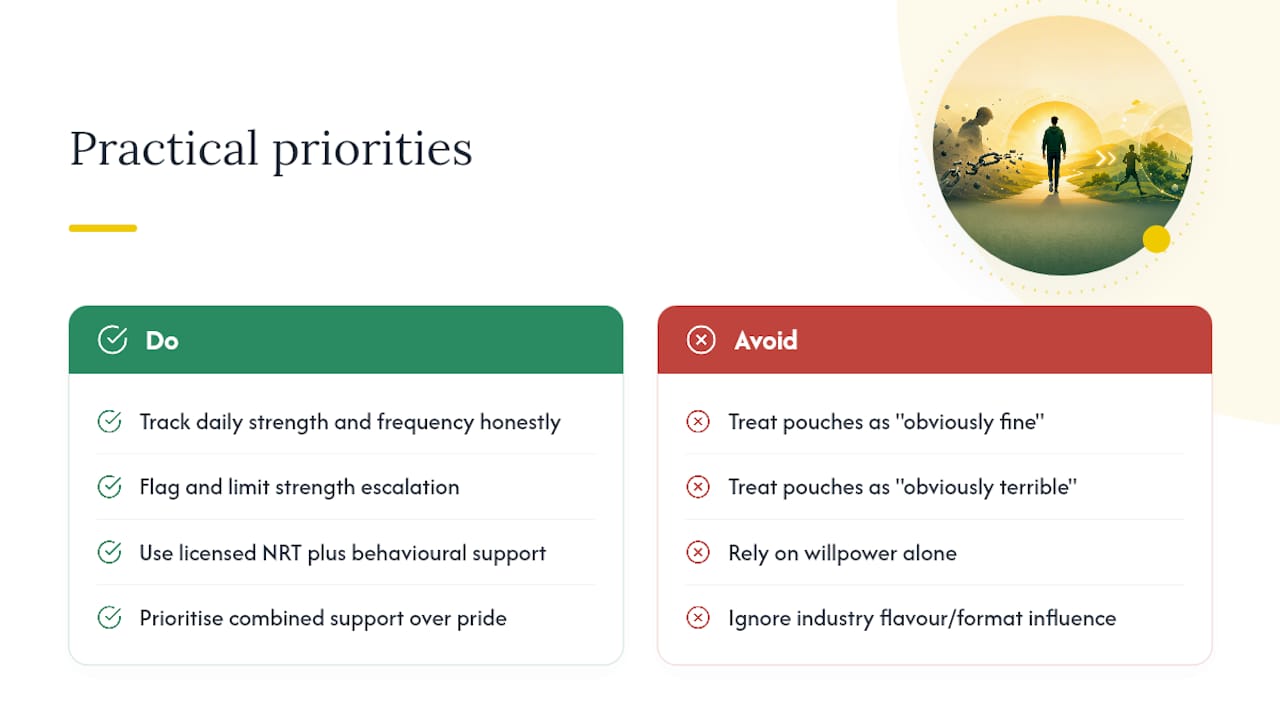
The evidence supports a plain conclusion: nicotine pouches are addictive by design, and the industry’s flavour and format choices favour retention over cessation. That’s not a conspiracy theory, it’s what the marketing and use-pattern data actually show. Where conventional advice falls short is in treating pouches as either “obviously fine” or “obviously terrible”. Neither framing helps someone who’s already dependent and needs a practical way out.
What we think matters most: strength awareness. Most people who develop heavy dependence didn’t set out to use 20mg pouches all day. They drifted there, one stronger tin at a time, because nobody flagged the escalation. If you’re already using pouches, tracking your actual daily strength and frequency, honestly, is more useful than any single quitting tip. What should come second is accepting that willpower alone rarely beats a well-designed nicotine reward system. Combining licensed NRT with behavioural support consistently outperforms going cold turkey unsupported, and that’s worth prioritising over pride.
— FNGN
Where Fuzesnus fits if you’re managing nicotine use
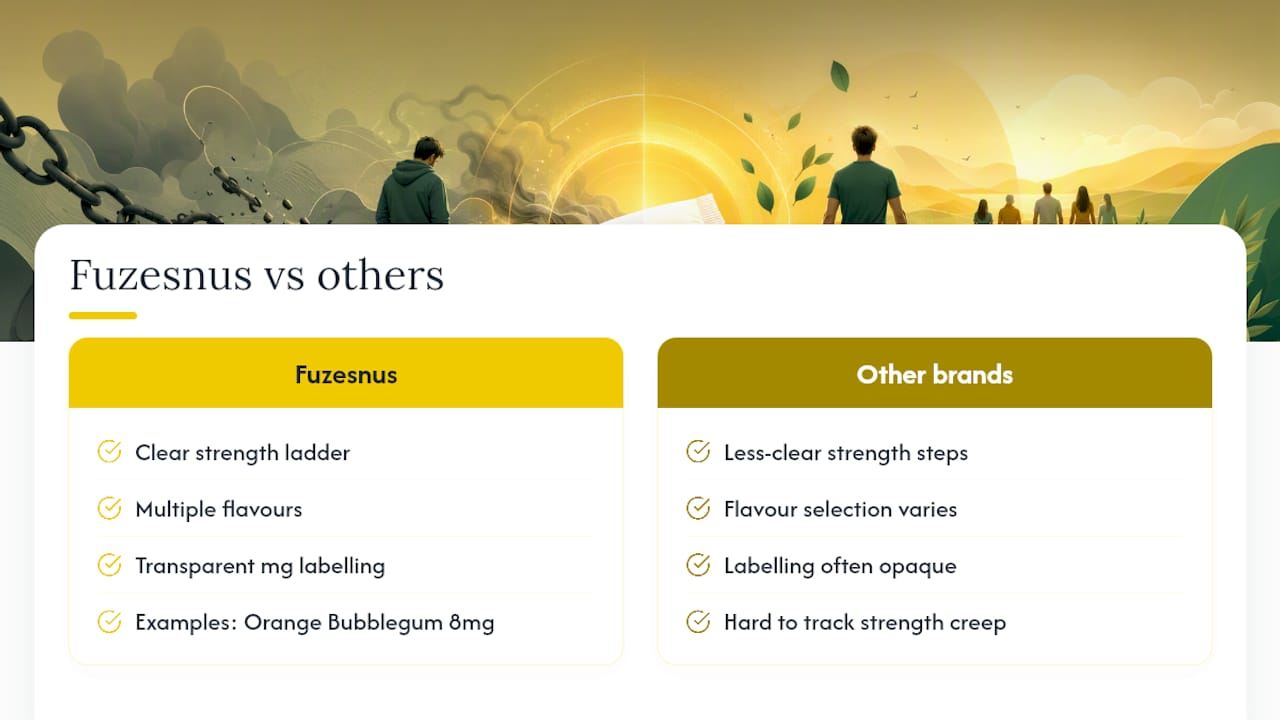
If you already use nicotine pouches and you’re focused on managing strength rather than stopping outright today, some brands offer a clearer strength ladder, multiple flavours, transparent milligram labelling, and same-day delivery in select regions when ordered by a certain time.

That transparency matters more than it sounds. A lot of dependence forms because people can’t easily see their own strength creep, and having clearly labelled options within a range of strengths makes it possible to step down deliberately rather than by accident. Some nicotine pouch brands do not market themselves as quitting products, and you shouldn’t treat them as such without consulting a GP. But if you’ve already decided pouches are part of your routine, choosing a product with visible, consistent strength labelling, like Orange Bubblegum 8mg for lower intake or Triple Mint 20mg if you’re already at that level, gives you more control than guessing with unfamiliar brands. Browse the full range at Fuzesnus and check same-day delivery in your county before you order.
This article is general information, not a substitute for advice from a qualified doctor. Consult a qualified healthcare professional about your own circumstances before acting on anything here.
Sources
The clinical claims in this article draw on three sources worth reading directly if you want the full detail. Stanford Medicine’s explainer covers the industry and addiction mechanics. The CDC’s nicotine pouches page sets out official public-health guidance on risk groups. A peer-reviewed review in PMC examines ingredients, toxicant variability, and regulatory gaps. For anything specific to your own health, talk to a GP or your local stop-smoking service.
- Nicotine pouches, tobacco’s latest ploy: Five things to know
- Nicotine pouches | Smoking and Tobacco Use