


Stop Nicotine Pouch Burn in 48–72 Hours with Lower Strength
A mild sting when you first place a pouch is normal and usually fades within half an hour. Persistent burning, a raw patch that will not settle, or a white lesion that does not fade is not normal, and means you should remove the pouch, stop using that spot, and get it checked if it does not resolve in a couple of days. Rinse with water, hydrate, and reposition future pouches rather than pushing through the pain.
TL;DR:
- Burning from nicotine pouches typically occurs within a few minutes due to chemical alkalinity, but persistent lesions signal potential tissue damage requiring cessation.
- Higher pouch strength, especially in 30mg options, results in more intense irritation, faster nicotine absorption, and stronger side effects.
- Flavour chemicals like mint and cinnamon can trigger inflammatory responses, exacerbating oral tissue irritation beyond the alkaline reaction.
- Mechanical factors such as pouch size, pressure, biting, dry mouth, or existing gum sensitivity increase burn risk, especially when rupturing the fibre releases nicotine rapidly.
- Reducing pouch strength, rotating placement, avoiding chewing, and temporarily skipping flavours can substantially decrease tissue irritation and promote healing.
Table of Contents
- What causes nicotine pouch burn
- Is it normal? How to tell a harmless sting from tissue damage
- How to reduce or stop nicotine pouch burn
- Recovery timeline and what to expect
- How Fuzesnus designs against the burn
- Try a lower-burn starting point today
- Sources
- FAQ
- An honest take on the “just get used to it” advice
What causes nicotine pouch burn
The sting comes from chemistry as much as friction. Manufacturers raise the pH of the pouch filler using alkaline buffers, because a more alkaline environment pushes nicotine across the oral mucosa faster. That speed is the point of the product, but it is also what makes your gum tingle or burn in the first few minutes.
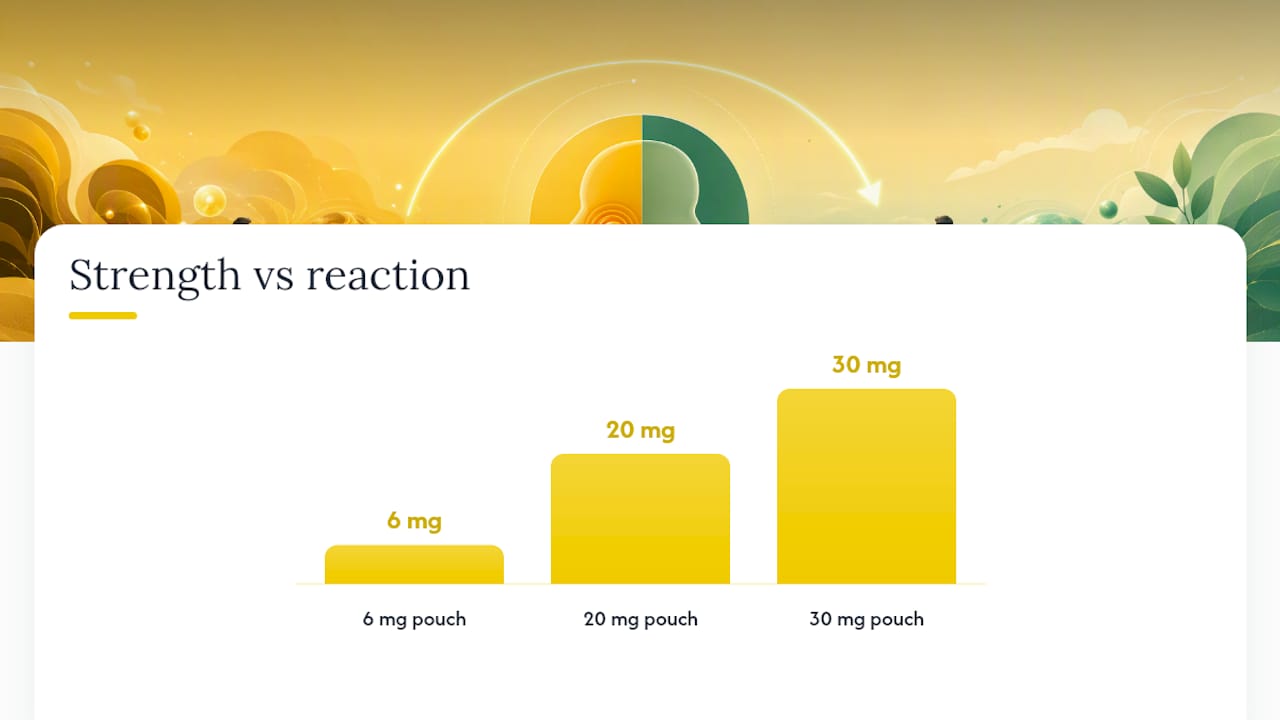
Strength plays a direct role too. A clinical crossover study measuring plasma nicotine and side effects across 6mg, 20mg, and 30mg pouches found the 30mg version produced the highest nicotine peak, the strongest side effects, and the sharpest rise in heart rate. Higher strength leads to faster extraction and a more intense mucosal reaction, not just more nicotine.
Flavour chemicals add another layer. The Karolinska Institutet’s comparative study found nicotine pouches caused more inflammatory reactions than traditional snus, with mint flavours triggering stronger responses in some users. Cooling agents and cinnamon compounds can activate the same sensory receptors that make menthol sweets feel icy, and on already-irritated tissue that sensation reads as burn rather than freshness.
Mechanical factors matter just as much as chemistry:
- Pouch size and pressure: larger pouches held against one spot concentrate irritation.
- Chewing or biting the pouch: this ruptures the fibre and dumps buffered nicotine directly onto tissue, intensifying the sting almost immediately.
- Dry mouth: reduced saliva means the alkaline buffer sits in more concentrated contact with the gum.
- Existing gum sensitivity or minor cuts: irritated tissue reacts faster to any additional insult.
Pro Tip: Never chew or press a pouch with your tongue. Rupturing the fibre releases its nicotine and buffer faster than the material was designed to, which is one of the quickest routes to a genuine burn rather than a passing sting.
Is it normal? How to tell a harmless sting from tissue damage
A normal reaction peaks within the first few minutes, then eases off. Most people feel some tingling during the first week of regular use as their tissue adjusts, and that sensation should improve within 10 to 30 minutes of placing a fresh pouch, not worsen.
Tissue damage looks different. Watch for these signs:
- A raw or sore patch that lingers well after you remove the pouch.
- A white lesion or patch that does not fade within a day or two.
- Pain that increases rather than settles, or spreads beyond the placement site.
- Any bleeding, swelling, or ulceration.
Histopathological work on regular pouch users has found genuine tissue changes at placement sites in some cases, not just surface redness.
Analyses of oral tissue from pouch users have identified parakeratosis, thickened epithelium, and inflammatory infiltration at the exact spots where pouches were habitually placed, evidence that repeated exposure at one site can cause real cellular change, not simply a passing sting.
That finding comes from histopathological analysis of oral mucosal changes in pouch users, and it is the clearest reason to treat a lesion that will not heal as a signal to stop, not push through. Individual sensitivity varies widely, too: some research on the link between duration of use and mucosal lesions found that how long someone had used pouches did not always predict lesion severity, which suggests product choice and placement habits matter more than simple time served.
How to reduce or stop nicotine pouch burn
Work through these steps in order. Most people find relief within the first two or three.
- Remove the pouch immediately if the sting is sharp or unexpected, then rinse your mouth with plain water.
- Drink water and stay hydrated through the day. Dry mouth concentrates the alkaline buffer against your gum.
- Stop chewing or pressing the pouch with your tongue or teeth. Let it sit passively.
- Step down in strength for 7 to 14 days. If you normally use 20mg, try 10mg or lower and see if the sting disappears. A brand like Fuzesnus offers this kind of range, which makes stepping down straightforward rather than a compromise.
- Switch to a mini or slim format if the standard size feels too bulky against your gum.
- Avoid mint or cinnamon flavours temporarily if you suspect the flavour compound itself is triggering the reaction.
- Rotate placement across four positions (upper left, upper right, lower left, lower right) and avoid the irritated spot entirely for at least 24 hours.
- Space out use so the same patch of tissue gets 12 to 24 hours of recovery time between sessions.
- Consider a low-dose nicotine gum or lozenge as a stand-in while your gum heals, if you still need nicotine but want to give tissue a full break.
- Stop entirely for 48 to 72 hours if burning persists despite these changes, and see a dentist or your GP if the tissue does not settle.
Pro Tip: Rotation across multiple oral quadrants is the most effective technique to reduce recurring burn, even more so than strength reduction alone.
Recovery timeline and what to expect
Minor irritation from an alkaline reaction or excess pressure typically settles within 48 to 72 hours once you reduce strength, rotate placement, or take a short break. Most cases resolve with these behavioural changes alone.
Lesions that persist beyond two to three weeks, change shape, or develop a white or keratotic appearance need professional assessment rather than more waiting. Some histopathology research has documented these kinds of lesions specifically at habitual placement sites, which is why rotation matters equally for long-term tissue health and comfort.
- Days 1 to 3: sting should noticeably ease if you have lowered strength or rotated position.
- Week 1 to 2: any lingering tenderness should be fading, not building.
- Beyond 2 to 3 weeks: a lesion that has not resolved is a reason to see a dentist, not to switch flavours again.
How Fuzesnus designs against the burn
Product design has more influence over comfort than most users realise. A low-drip pouch construction limits how much of the alkaline filler leaches into direct contact with your gum, which is the mechanical half of the burn problem. Controlled nicotine release matters just as much: a pouch that dumps its dose in the first ninety seconds is always going to feel harsher than one built to release steadily over its lifespan.
Some manufacturers build their ranges around this principle, tailoring strength and release to give sensitive users a lower-irritation route rather than just a lower number on the tin. Options in various strengths suit users stepping down from stronger pouches or starting fresh, while flavors and strengths vary to accommodate different preferences and tolerances.
None of this replaces good habits. Rotation and hydration still do most of the work. But starting with a pouch designed for a smoother release gives your gum less to fight against from the first placement.
Try a lower-burn starting point today
If burn has put you off pouches altogether, the fix is often as simple as starting lower and rotating properly rather than abandoning them. A sensible trial looks like this: pick an 8 to 10mg strength, use a mini or slim format if you can, and commit to rotating across four placement zones from day one rather than waiting for irritation to force the habit.
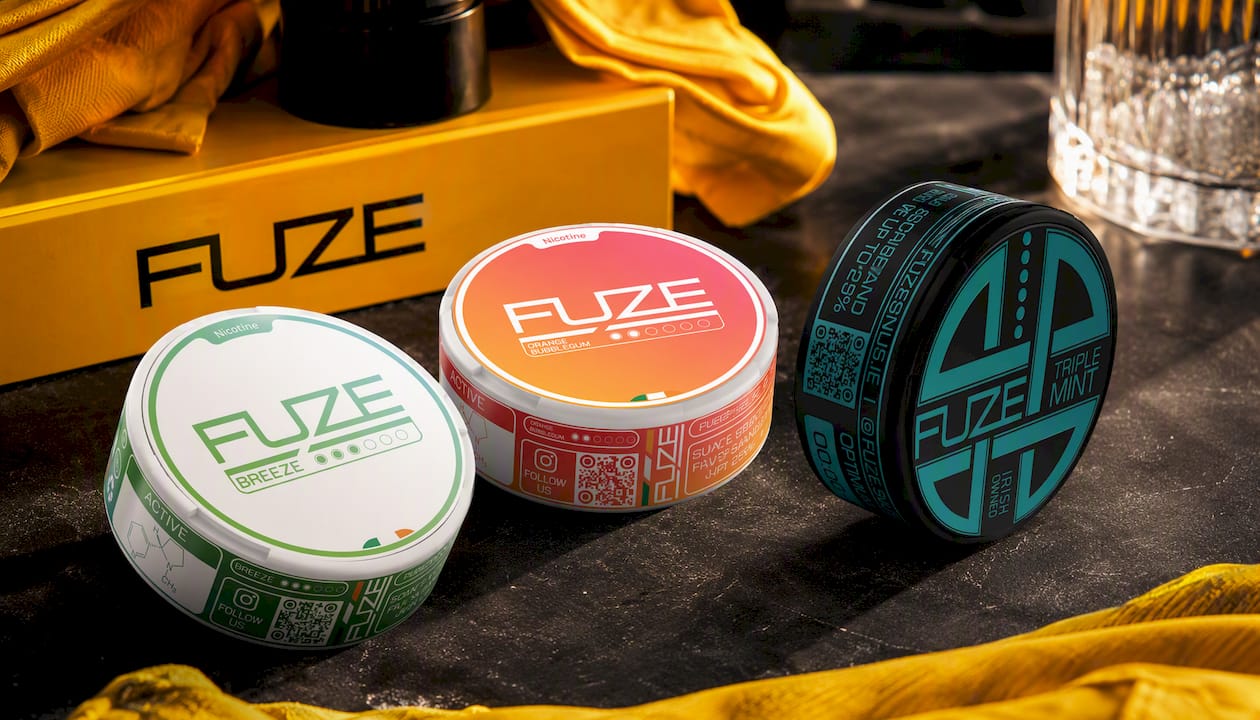
Orange Bubblegum 8mg is built for exactly this kind of trial, giving you flavour and nicotine satisfaction without the intensity that triggers burn in sensitive users. If you are stepping down from a stronger habit rather than starting fresh, BREEZE 10mg offers a similar low-irritation profile with its own character. Once your tissue has adjusted and you want more from each pouch, Triple Mint 20mg is there for that next stage.
Some companies ship same-day across Ireland for orders placed by a certain time, allowing a lower-strength trial pack to arrive promptly. If a particular strength or flavour still does not sit right, dropping down another notch rather than persisting is always the better move for your gum.
Sources
The clinical crossover study on nicotine delivery and side effects shows exactly how strength drives absorption speed and irritation. The histopathological analysis of oral mucosal changes documents what tissue damage actually looks like under examination. The CDC’s guidance on nicotine pouches covers the broader safety picture, including addiction risk.
This article is general information, not a substitute for advice from a qualified doctor. Consult a qualified healthcare professional about your own circumstances before acting on anything here.
- Small pouches, but high nicotine doses—nicotine delivery and acute effects after use of tobacco-free nicotine pouches - PMC
- New study: Nicotine pouches are not a gentler alternative for the oral mucous membrane | Karolinska Institutet
FAQ
Is it normal for nicotine pouches to burn?
A brief tingling or sting when you first place a pouch is common, especially in your first week of use, and should ease within 10 to 30 minutes. Persistent pain, raw patches, or lesions are not normal and mean you should stop using that spot.
Is using two nicotine pouches a day too much?
It depends entirely on strength and your existing tolerance rather than the number alone. Two pouches at a low strength like 8mg is very different from two at 20mg or higher, and if either causes recurring burn, stepping down in strength matters more than counting sessions.
Is it normal for a nicotine patch to burn?
Patches can cause mild skin irritation or redness at the application site, similar in principle to pouch irritation on oral tissue, but persistent burning, blistering, or a rash that spreads is not typical and warrants medical advice.
Which nicotine pouch strength causes the most burn?
Higher-strength pouches have been shown in clinical testing to produce stronger side effects and faster nicotine uptake, which corresponds to more intense mucosal irritation than lower-strength options.
An honest take on the “just get used to it” advice
The most common answer users get when they ask about pouch burn is some version of “your mouth will adjust”. That advice is not wrong, exactly, but it is lazy, and it skips the part where adjustment should mean the sting fades, not that you learn to tolerate ongoing pain.
There is a real difference between tissue adapting to a new stimulus and tissue being repeatedly injured at the same spot until it stops complaining as loudly. The histopathology research on pouch users backs this up: the changes found at habitual placement sites were not imagination or oversensitivity, they were measurable cellular changes. Telling someone to push through that is bad advice dressed up as toughness.
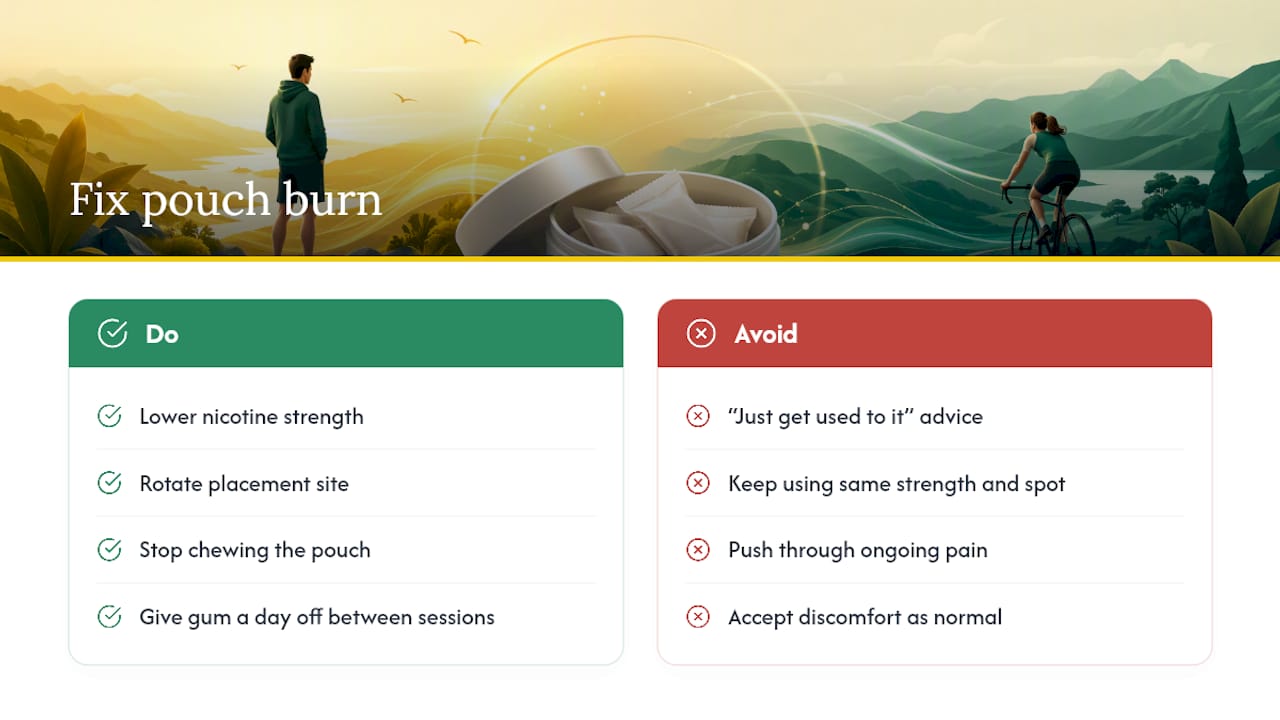
What actually works is far less dramatic than most forum threads suggest. Drop the strength, rotate the spot, stop chewing the thing, and give your gum a day off between sessions. That combination resolves the overwhelming majority of burn complaints without any need to quit pouches altogether or accept discomfort as the cost of using them. The people who struggle longest are usually the ones using the same strength in the same spot for months and assuming burn is just part of the deal. It is not.
— FNGN