


Keep Nicotine Pouches Fresh in Ireland: 6–24 Months Shelf Life
Yes, nicotine pouches do expire. Most carry a best-before date commonly ranging from about 6 to 24 months from manufacture, depending on the brand and format. Past that point, you’re mostly losing flavour, moisture and nicotine strength, not risking sudden harm. The sections below cover what the science says, how to store cans properly, and how to tell when a pouch has genuinely gone off.
TL;DR:
- Most nicotine pouches have a shelf life of 6 to 24 months, with longer durability in low-moisture formats and proper storage conditions.
- Temperature, humidity, light exposure, and air significantly accelerate flavor and potency decline once a can is opened.
- Proper storage in a cool, dry, dark place and avoiding freezing can extend freshness, while frequent opening shortens the lifespan.
- Degradation after expiry mainly reduces flavor and nicotine strength rather than posing health risks, unless there are visible signs of spoilage.
- A can should be discarded if it shows mold, off-odor, discoloration, or significantly diminished flavor, with no safety concerns from typical aging within the best-before period.
Table of Contents
- What manufacturers and lab studies say about nicotine pouch shelf life
- Factors that affect how quickly pouches lose quality
- Unopened vs opened cans: how long each stage really lasts
- How to store nicotine pouches for the longest-lasting freshness
- Signs a nicotine pouch has passed its best
- Are expired or degraded nicotine pouches actually harmful?
- Keeping pouches fresh day to day
- Fuzesnus pouches built with freshness in mind
- Sources
What manufacturers and lab studies say about nicotine pouch shelf life
Check the base of the can. Most brands stamp a best-before date or a batch code there, and that date reflects how long the manufacturer guarantees peak flavour and nicotine release under normal storage. It isn’t a hard safety cutoff like a “use by” date on fresh food.
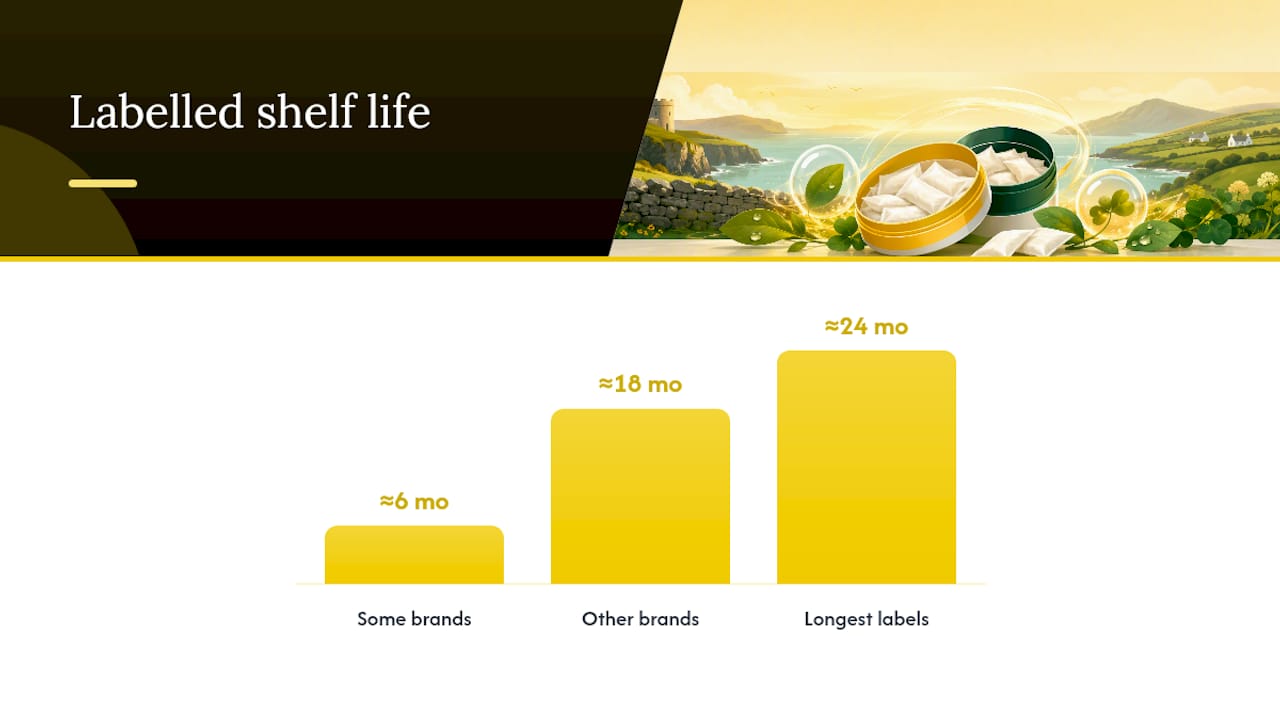
Labelled shelf lives vary more than most users expect. Some brands print about 6 months, others up to around 18 or 24 months, and the difference usually comes down to formulation, moisture content, and how the pouch material is sealed. A dry, low-moisture pouch generally holds its properties longer than a moist, high-release format, because there’s simply less water content to drive chemical change.
The lab evidence backs up a reasonably relaxed timeline. A stability and toxicological evaluation of on! PLUS nicotine pouches tested seven known nicotine degradants across nine products under long-term storage conditions set by the International Council for Harmonisation (ICH), 25°C and 60% relative humidity, which mimics a warm room over time.
Stat check: After 12 months under those conditions, total measured degradants sat at roughly 1.4% of the target nicotine level. That’s a small chemical shift for a full year of ageing.
The same research, detailed in a full-text PMC article, identifies myosmine, cotinine and nicotine-N’-oxide as the only breakdown products showing up consistently, and all at low microgram-per-gram levels.
What this means for you at home:
- A can stored properly and used before its best-before date should deliver close to its original strength and flavour.
- Batch codes on the tin let you estimate manufacture date if the best-before print has worn off.
- Mint and menthol formats often mask early flavour fade better than fruit varieties, simply because the strong minty note covers subtle change longer.
- Brand-to-brand variation is normal. There’s no single universal number, so always trust the can over a generic average.
Factors that affect how quickly pouches lose quality
Four things drive most of the decline you’ll notice, and three of them are entirely in your control.
Temperature is the biggest lever. Heat accelerates the chemical reactions that break down flavour compounds and shift moisture, while cool conditions slow everything down. A glovebox on a summer afternoon can hit temperatures well above anything a pouch was designed to handle.
Humidity works both ways. Too much moisture in the air and the pouch turns soggy, loses structure, and can start tasting flat. Too little and it dries out, turning papery and harsh on the gum.
Light exposure, particularly UV, degrades flavour molecules over time, which is one reason most cans are opaque or dark rather than clear plastic.
Air exposure matters every time you open the lid. Oxygen reacts with the pouch contents, and the more often a can sits open, the faster that process compounds.
- Heat: speeds up flavour and chemical breakdown
- Humidity: soggy pouches or dry, papery ones depending on direction
- Light: fades flavour compounds, especially UV
- Air exposure: accelerates with every lid opening
- Formulation: pH, moisture level and flavour chemistry all shift the baseline
Pro Tip: Keep a small tin or resealable pouch case for daily carry, and leave the main bulk can sealed in a drawer. Every extra opening of the big can is a small hit to everything still inside it.
Unopened vs opened cans: how long each stage really lasts
A sealed can behaves very differently from one you’ve already cracked open, and mixing up the two timelines is where most confusion starts.
- Unopened, stored well. A can kept cool, dry and out of direct light should hold peak quality through its entire labelled window, commonly 6 to 24 months depending on brand.
- Opened, dry or slim formats. These tend to hold up for weeks to a couple of months after opening, since lower moisture content gives them more resistance to oxidation and drying out.
- Opened, moist or high-release formats. Expect a shorter runway, typically 2 to 4 weeks before flavour and strength noticeably fade.
- Frequently reopened cans. Every open and close cycle lets in air and moisture, so a can opened daily will decline faster than one opened once a week.
A workable rule of thumb: finish an opened moist can within about a month, and don’t stress too much about a dry slim format lingering a bit longer in the tin, provided the lid stays shut between uses — for more on keeping your nicotine products fresh during daily carry, see our guide on Disposable vapes in Vegas.
How to store nicotine pouches for the longest-lasting freshness
Storage habits matter more than most people assume, largely because the damage happens quietly and adds up.
Keep cans in a cool, dry, dark spot, ideally somewhere close to normal room temperature or slightly below, and away from radiators, sunny windowsills or car interiors. A kitchen cupboard away from the oven works better than a bag left on a warm desk.
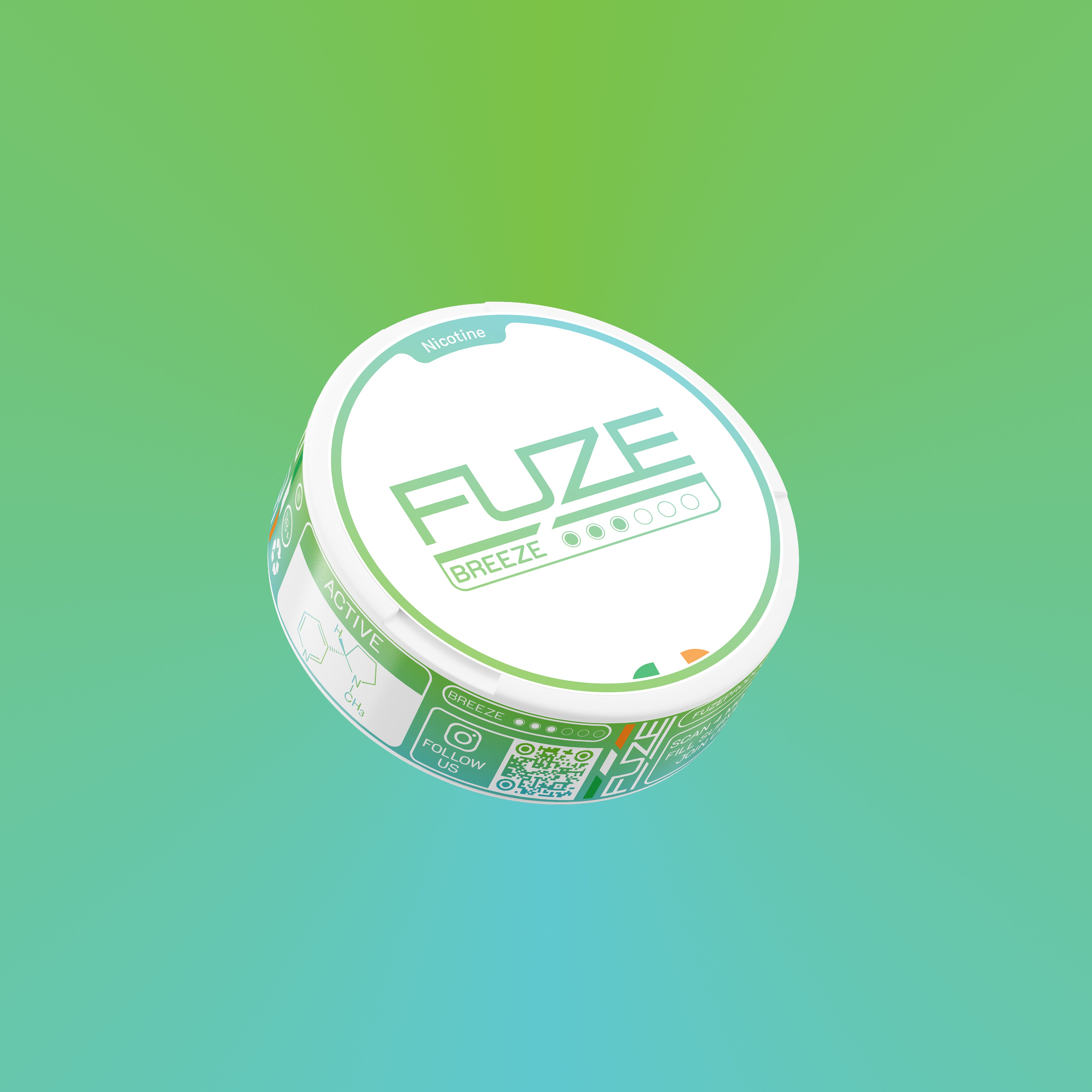
Refrigeration can extend life further if you’re storing a genuine backlog. The trick is letting the can return to room temperature before opening it. Opening a cold can straight from the fridge invites condensation, and that extra moisture inside the tin does more harm than the cold ever helped.
Don’t freeze pouches. Freezing can shift moisture distribution inside the pouch material and change its texture in ways that don’t reverse once thawed. It sounds like a clever long-term hack, but it tends to backfire.
- Store cool, dry and dark, away from heat sources
- Let refrigerated cans warm to room temperature before opening
- Never freeze cans
- Keep the lid tightly shut between uses
- Rotate stock, using the oldest cans first if you buy in bulk
Pro Tip: If you buy multiple cans at once, write the purchase date on the lid with a marker. It takes ten seconds and stops you accidentally leaving the oldest tin at the back of the drawer for months.
This lines up with general manufacturer storage guidance, which consistently points to cool, dry, sealed conditions as the single biggest lever you have over shelf life.
Signs a nicotine pouch has passed its best
A quick sensory check tells you almost everything you need to know before putting a pouch in.
- Texture: dry, papery or crumbly pouches have lost moisture; they’ll still work but feel harsher and less smooth than fresh ones.
- Flavour or smell: weak, flat or slightly off smells signal the flavour compounds have broken down.
- Discolouration or spotting: any visible mould or unusual colour change means the can goes in the bin, no exceptions.
- Weaker nicotine hit: a milder sensation than you’re used to usually points to potency loss rather than danger, but it’s still a sign the can is past its best.
If you’re genuinely unsure, don’t experiment. Tossing a questionable pouch costs you far less than finding out the hard way.
Are expired or degraded nicotine pouches actually harmful?
Mostly, no. A pouch past its best-before date is more likely to disappoint than harm you. The toxicological evaluation covering degradant formation found that even after 12 months of long-term storage conditions, total degradants stayed around 1.4% of target nicotine content, well within a range the researchers characterised as low risk.
Stat check: Only three degradants, myosmine, cotinine and nicotine-N’-oxide, showed up consistently in the testing, and all at low microgram-per-gram levels rather than anything approaching a toxic threshold.
That’s reassuring for the ordinary case of a can that’s simply a few months past its date and has been stored reasonably. You’ll likely notice weaker flavour and a milder nicotine sensation, not a safety event.
The genuine red flags are different, and they’re visual or olfactory rather than date-based:
- Visible mould, fuzzy spots or discolouration
- A sour, fermented smell unlike the pouch’s normal scent
- An unusually strong or chemical odour that wasn’t there when you bought it
Any of those means discard the can immediately. If you’ve already used a pouch showing these signs and notice unusual symptoms afterwards, irritation, nausea, anything out of the ordinary, it’s worth speaking to a healthcare professional rather than assuming it will pass on its own.
Keeping pouches fresh day to day
Lid discipline sounds obvious until you’re the person leaving a tin open on the kitchen counter overnight. Close it every time. Keep bulk stock in a cupboard, not a car dashboard where summer heat turns the interior into an oven within minutes, and carry only a day or two’s worth in a small tin.
Buying in bulk works if you rotate properly. Oldest cans first, newest at the back. It’s a small habit that pays off, especially with low-drip pouches, where the flavour release is designed to stay smooth and consistent rather than fading unevenly across a can’s lifespan.
— FNGN
Fuzesnus pouches built with freshness in mind
There are plenty of ways to lose flavour to a badly stored can, but the format you choose from the start matters just as much as how you keep it afterwards. This brand designs its pouches around rapid-release, low-drip technology specifically so the flavour holds steady across each use rather than tailing off unevenly, which pairs naturally with good storage habits rather than fighting against them.
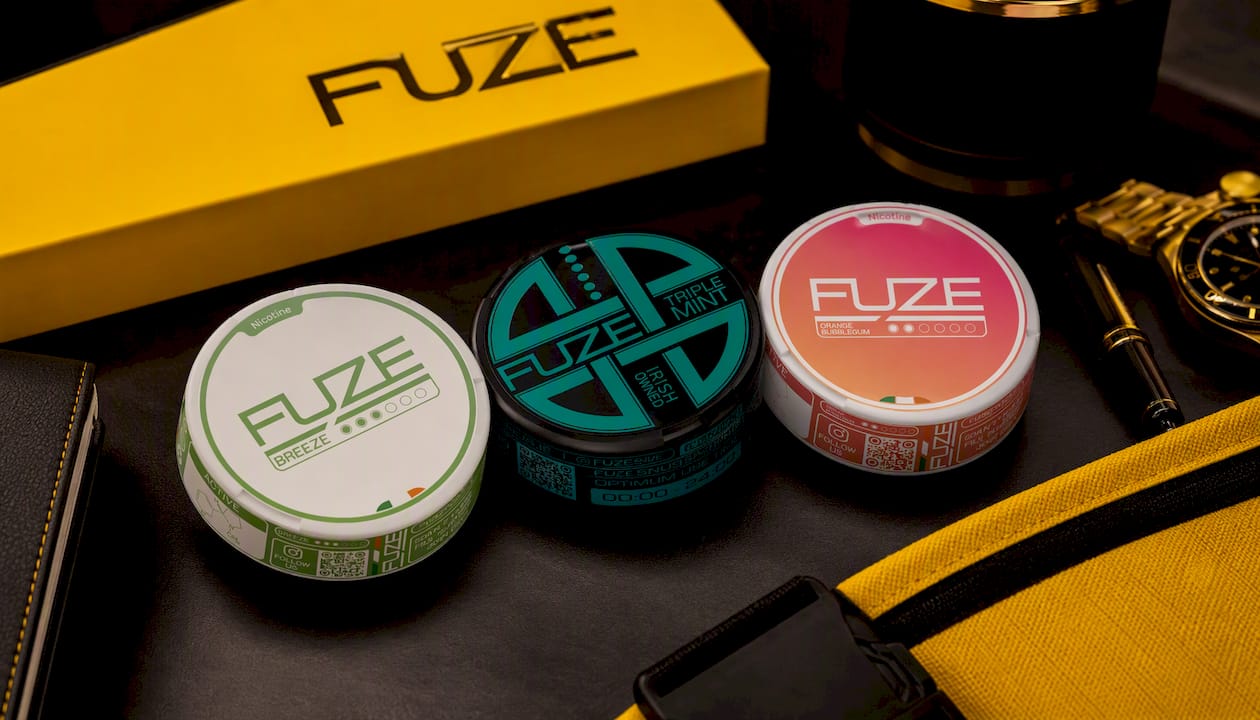
If mint is your preference, Triple Mint 20mg leans on a strong menthol profile that tends to mask minor flavour fade longer than fruit varieties, useful if you’re the type to keep a tin going for a few weeks. For something milder and fruit-forward, Orange Bubblegum 8mg suits users who want a gentler nicotine strength without sacrificing a distinct taste. And if you want the brand’s signature smooth, low-drip release at a moderate strength, BREEZE 10mg is the starting point most Irish customers reach for first.
Orders placed before 6pm qualify for same-day delivery in eligible areas, with wider shipping available elsewhere across Ireland. Browse the full range at Fuzesnus and pick the strength and flavour that suits how you actually use pouches day to day.
Sources
- Analysis and toxicological evaluation of nicotine degradants and impurities in oral tobacco products: a case study of on! PLUS nicotine pouches
- Full-text stability and toxicology resource on nicotine pouch degradants (PMC)
- How to store nicotine pouches so they stay fresh | Calipouch
- How long do nicotine pouches last? Full guide | SnusFriend