


Start at 4 to 8 mg: Evidence Backed Nicotine Pouch Dosing
Most adults new to nicotine pouches should start at 4 to 8 mg and cap themselves at roughly 2 to 6 pouches a day while they gauge their tolerance. Anything higher, and you’re playing with a nicotine load that can rival or exceed a cigarette in total exposure. Go slowly, or the pouch chooses your habit for you rather than the other way round.
TL;DR:
- Starting with 4 to 8 mg pouches and limiting use to 2 to 6 daily helps prevent excessive nicotine exposure compared to cigarettes.
- Nicotine delivery varies based on pouch strength, hold time, formulation speed, and individual saliva production, affecting actual blood absorption.
- Higher strengths (above 9 mg) often exceed cigarette nicotine peaks, especially with rapid-release formats that reach Tmax faster.
- A single pouch test and waiting at least 45 to 60 minutes between uses are essential before increasing strength or frequency.
- Pregnant, breastfeeding, under-18, or heart disease patients should avoid pouches due to potential health risks and addictive properties.
Table of Contents
- What are the nicotine pouch strengths and how many should you use?
- How does pouch strength affect your body?
- How do you pick a starting strength and taper safely?
- What side effects should you watch for, and who should avoid pouches?
- Where this guidance comes from
- Which FUZE strength matches your experience level?
- A closing note on balancing satisfaction and risk
- Primary sources and further reading
- Sources
What are the nicotine pouch strengths and how many should you use?
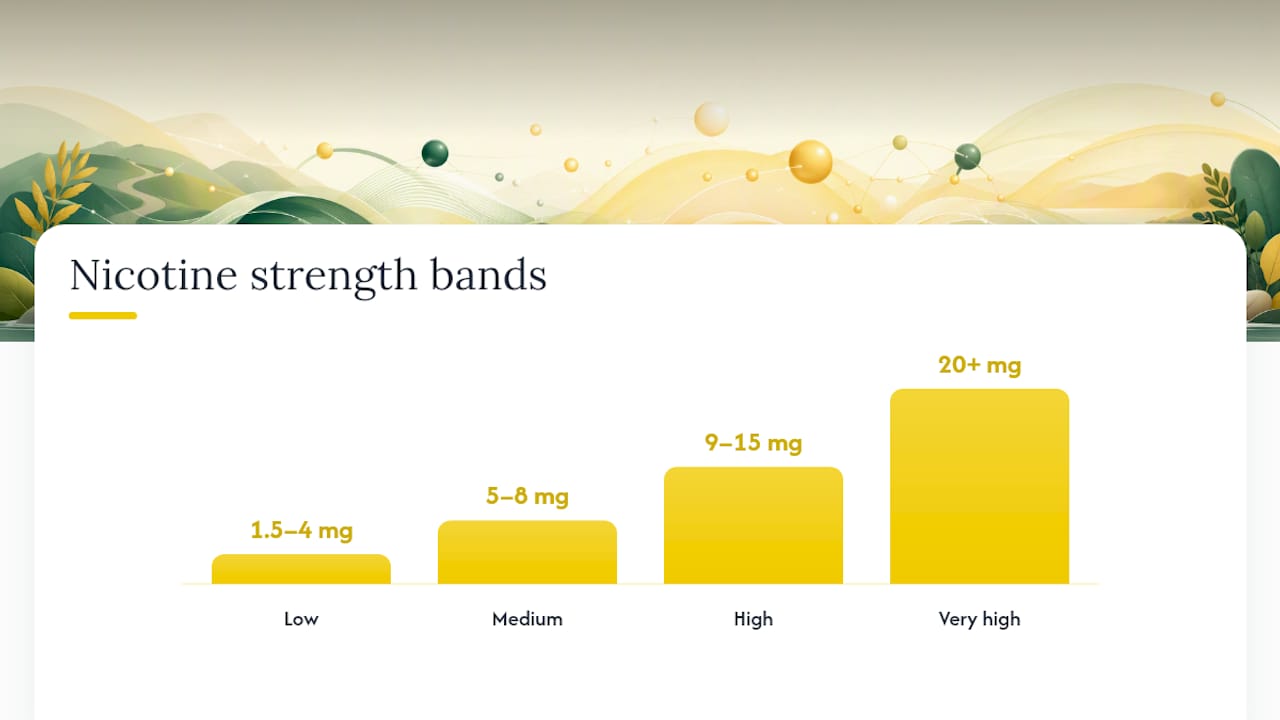
Strength bands on pack labels aren’t standardised across brands, but a rough map holds up across most products on the market:
- Low (1.5–4 mg): subtle, background nicotine. Suits absolute beginners or very light smokers testing the format.
- Medium (5–8 mg): the most common starting point for people switching from cigarettes. Noticeable but manageable.
- High (9–15 mg): aimed at established users who already know their tolerance.
- Very high (20 mg+): reserved for heavy, long-term users. Not a beginner category, ever.
A light smoker (five cigarettes a day or fewer) often does fine on 2 to 4 low or medium pouches daily. A moderate smoker (10 to 15 a day) tends to land somewhere between 4 and 6 medium pouches. Heavy smokers sometimes move towards higher-strength products, but that’s a decision to make gradually, not on day one.
Pro Tip: Labelled mg is a ceiling, not a guarantee. Extraction rates from a pouch typically run around 50 to 70 percent depending on the product and how long you hold it, so an 8 mg pouch rarely delivers the full labelled nicotine dose into your system.
That gap between labelled and delivered nicotine is why two people using the same product can report very different effects. Hold time, saliva production, and pouch moisture all shift how much nicotine actually crosses into your bloodstream. The practical rule of thumb: start at the low end of a band, don’t stack a second pouch to chase a stronger hit, and set yourself a daily number before you open the tin, not after.
How does pouch strength affect your body?
Three terms explain why an 8 mg pouch and a cigarette can feel completely different even though the numbers look comparable on paper. Cmax is the peak nicotine concentration your blood reaches. AUC (area under the curve) is the total nicotine exposure over time, like the total water that flows through a tap rather than just its strongest gush. Tmax is how long it takes to hit that peak.
A systematic review and meta-analysis of pouch pharmacokinetics found that 4 mg pouches often deliver a total nicotine exposure similar to a cigarette but with a noticeably lower and slower peak. Pouches labelled 8 mg or above often exceed a cigarette’s total exposure and peak concentration. This difference increases with higher strengths. A single centre crossover study measured a 30 mg pouch reaching a Cmax of roughly 29.4 ng/mL, nearly double a cigarette’s 15.2 ng/mL, alongside stronger cardiovascular effects.
Time to peak matters just as much. Pouches typically take 20 to 65 minutes to reach maximum concentration, compared with 5 to 8 minutes for a cigarette, according to the same review. That slower curve is partly why flavoured, rapid-release formulations can catch users off guard: they’re built to release nicotine faster, which pushes the peak higher even at the same labelled strength.
- Lower mg and shorter hold time reduce peak exposure.
- Rapid-release formulations push Cmax higher, faster.
- A slower Tmax means the effects of overdoing it arrive later than you’d expect, which is exactly when people reach for another pouch too soon.
How do you pick a starting strength and taper safely?
Work through this before you buy anything:
- Assess your current nicotine intake. Heavy smokers and long-term vapers generally tolerate higher strengths than someone trying pouches for the first time.
- Decide your goal. Switching fully from cigarettes, maintaining a steady habit, or reducing intake each calls for a different starting point.
- Run a one-pouch test. Use a single pouch, wait 60 to 90 minutes, and note how you feel before considering another. Don’t try more than three or four pouches total on your first day, regardless of strength.
- Set a spacing rule. Medium-strength pouches deserve at least 45 to 60 minutes between uses; high-strength pouches deserve longer. Never place a second pouch to top up a fading buzz.
- Build a taper if you want to cut back. Drop to a lower mg band, shorten your hold time by a few minutes, and remove one pouch from your daily count every three to four days over a two to six week stretch.
Pro Tip: Even nicotine-free pouches have been shown to ease cigarette cravings in trials, which suggests some of the relief comes from the ritual and mouthfeel, not just the nicotine. That’s worth remembering if you’re tapering: the habit itself is doing some of the work.
If you’re using pouches specifically to quit nicotine altogether, Cleveland Clinic notes that pouches aren’t a proven cessation tool the way licensed nicotine replacement therapy is. Speak to a pharmacist or GP if quitting entirely is the goal.
What side effects should you watch for, and who should avoid pouches?
Short-term side effects are common and usually mild: nausea, hiccups, mouth or throat irritation, and an upset stomach are the ones clinical summaries flag most often. Dizziness, a racing heart, or severe nausea are different: those are signs to stop and, if they don’t settle quickly, get medical attention.
- Nausea, hiccups, and mouth irritation: common, usually manageable.
- Dizziness or a pounding heartbeat: stop using and don’t repeat the dose.
- Severe or persistent symptoms: seek medical advice promptly.
The same crossover study that measured the 30 mg pouch’s high Cmax also recorded stronger cardiovascular responses at that strength, including a faster heart rate than lower-dose pouches or cigarettes produced. That’s a strong argument for treating 20 mg and 30 mg products with real caution rather than reaching for them out of habit.
Pregnant or breastfeeding people, under-18s, and anyone with unstable heart disease should avoid nicotine pouches entirely, a position the CDC states plainly alongside its broader warning that pouches remain addictive regardless of strength. If you’re on medication that interacts with nicotine, check with a pharmacist first. And don’t stack pouches with vapes, cigarettes, or other nicotine products without medical guidance. Your body doesn’t distinguish between sources; it just adds up the total.
Where this guidance comes from
This article is written by FNGN, drawing on peer-reviewed pharmacokinetic research and public health guidance rather than personal testing claims. FUZE’s own product notes describe rapid release, low-drip pouch technology, and flavours designed to last between 30 and 60 minutes; those are publisher claims, and you should check individual product pages for current specifics. Whichever brand you use, the same rule applies: test your own tolerance first, and follow the spacing and dosing guidance above regardless of what the label promises.
Which FUZE strength matches your experience level?
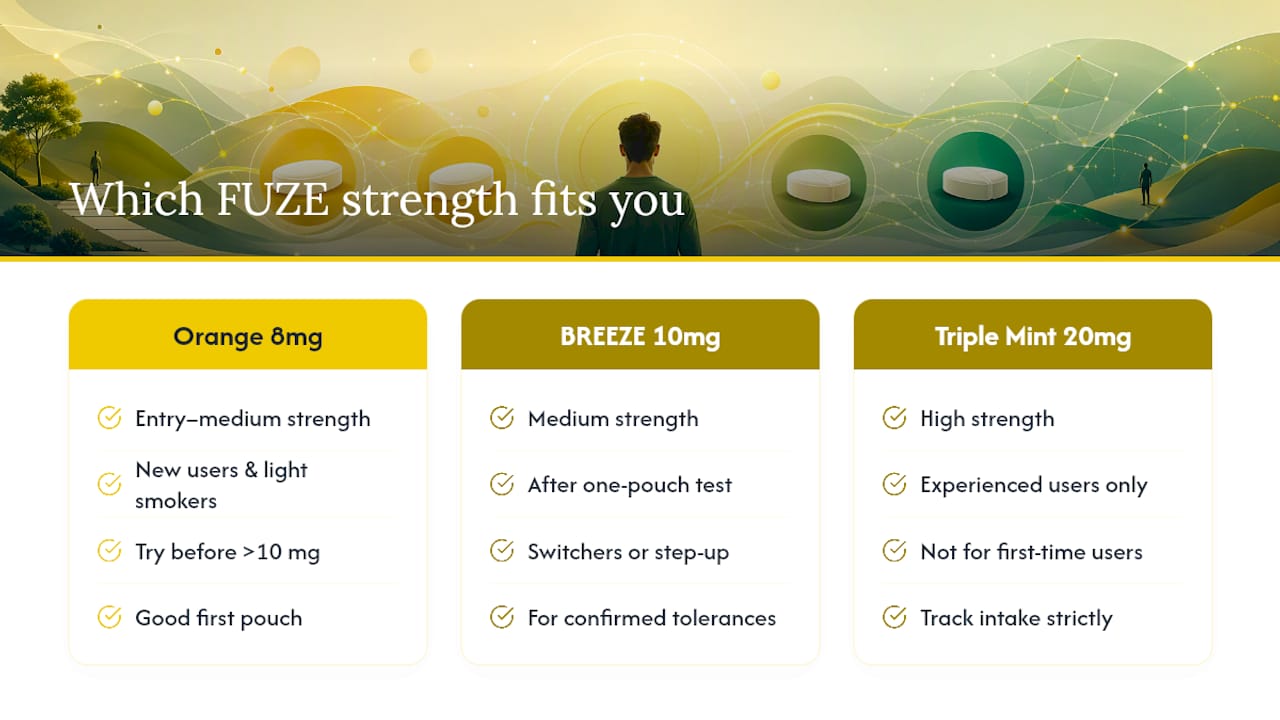
If you’re mapping the guidance above onto an actual purchase, FUZE’s three flavours sit at different points on the strength scale, which makes picking a starting product straightforward rather than guesswork.

Orange Bubblegum 8mg sits at the entry to medium band, the sensible first pick if you’re new to pouches or coming from light smoking. It’s the strength most people should try before going anywhere near double figures. BREEZE 10mg suits someone who has already run the one-pouch test above and knows a medium dose suits their tolerance, whether that’s a switch from cigarettes or a step up from a lower-strength pouch. Triple Mint 20mg is built for experienced users only, people who already track their intake and understand what a higher Cmax feels like for their own body; it is not where a first-time user should begin.
Whichever strength fits, start with one pouch, wait out the full effect before deciding on a second, and keep your daily count within the ranges discussed above. The pouches are designed to make that first pouch count. Same-day delivery is available in select counties if ordered by 6pm. Browse the BREEZE 10mg, Triple Mint 20mg, or Orange Bubblegum 8mg product pages, and if you’re still weighing pouches against other formats, this comparison of pouches versus vapes is worth a read before you order.
A closing note on balancing satisfaction and risk
Getting the nicotine hit you want while keeping your intake honest isn’t complicated: track what you use, and talk to a healthcare professional the moment quitting becomes the goal.
— FNGN
Primary sources and further reading
- Nicotine pouch pharmacokinetics compared to smoked tobacco: A systematic review and meta-analysis
- Small pouches, but high nicotine doses: nicotine delivery and acute effects after use of tobacco-free nicotine pouches
- Nicotine pouches | Smoking and Tobacco Use | CDC
- Are nicotine pouches bad for you? — Medical News Today
This article is general information, not a substitute for advice from a qualified doctor. Consult a qualified healthcare professional about your own circumstances before acting on anything here.
Sources
- Nicotine pouch pharmacokinetics compared to smoked tobacco: A systematic review and meta‑analysis
- Small pouches, but high nicotine doses—nicotine delivery and acute effects after use of tobacco‑free nicotine pouches
- Nicotine pouches | Smoking and Tobacco Use | CDC
- Are nicotine pouches bad for you? — Medical News Today