


Pouches Often Deliver More Nicotine: Nicotine Pouches vs Gum, Adults
Gum wins if you’re following a structured quit plan or have medical conditions that need professional oversight, because it’s a licensed nicotine replacement therapy with set dosing schedules. Pouches suit adults who want discreet, smoke-free nicotine without pharmacy packaging, though some deliver more nicotine into your bloodstream than gum does. Neither choice should be made blind. Talk to a GP or pharmacist before switching, especially if you’re quitting smoking or managing a heart condition.
TL;DR:
- Nicotine pouches often deliver higher total nicotine exposure than gum, building more gradually and maintaining steadier levels over time.
- Pouches are more discreet and hold flavor longer, making them suitable for social settings, while gum’s flavor fades quickly and involves visible jaw movement.
- Nicotine gum is a licensed product for quitting smoking, with a structured dosing schedule, whereas pouches are unlicensed consumer products meant for adult use.
- Long-term gum use can cause jaw joint issues and dental problems, but pouches may cause gum irritation or tissue whitening if used excessively in the same spot.
- For smokers aiming to quit, it is safer to rely on licensed NRT like gum with professional guidance, while pouches are better suited for discreet use without smoking cessation goals.
Table of Contents
- Nicotine pouches vs gum at a glance
- How do gum and pouches actually deliver nicotine?
- Pros and cons: discreetness, flavour, comfort and side effects
- When should you choose licensed NRT over pouches?
- How do you use each one properly, and how do you switch?
- Where Fuzesnus fits into this comparison
- What does switching from gum to pouches do to your oral health long term?
- Our take: stop treating this as a like-for-like swap
- Try Fuzesnus pouches built for discreet, everyday use
- Sources
Nicotine pouches vs gum at a glance
Before you weigh up the detail, here’s how the two stack up on the things that actually change your day-to-day experience.
- Discreetness: Pouches sit under the lip with no chewing motion and minimal drip if the pouch technology is decent; gum requires visible jaw movement and occasional spitting.
- Onset: Gum can start easing cravings within 5 to 10 minutes of proper chewing; pouches tend to build more gradually, often over 20 to 30 minutes.
- Duration: A piece of gum lasts around 20 to 30 minutes of active use; pouches are typically designed for 30 to 60 minutes of steady release.
- Flavour range: Gum flavours are usually limited to mint or fruit and fade quickly; pouches often hold flavour and moisture for longer, depending on the brand.
- Quitting suitability: Gum is a licensed stop-smoking medicine with an evidence base for quitting; pouches are not licensed cessation aids.
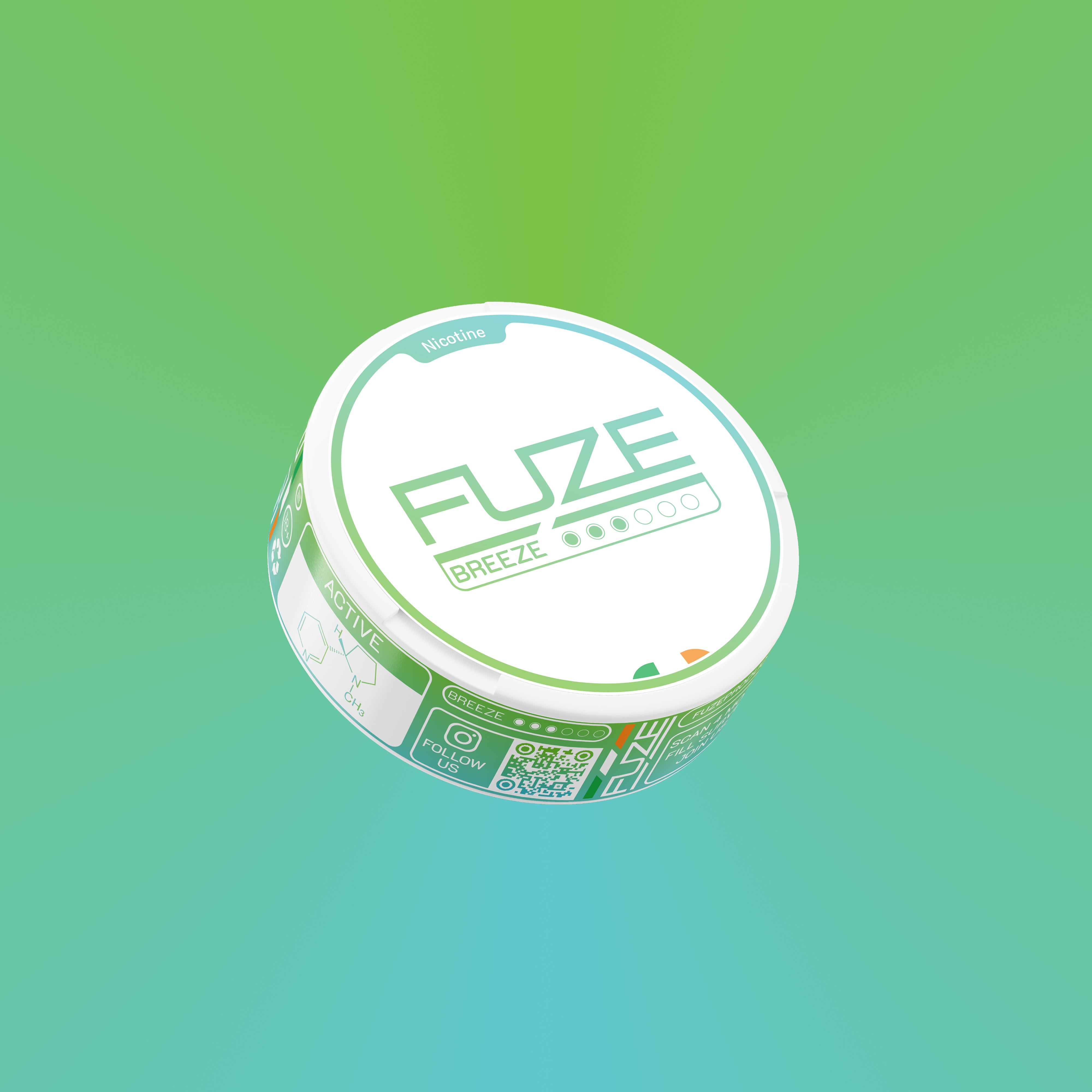
Some nicotine pouches are built around low-drip technology and flavours that run for 30 to 60 minutes, which matters if you’ve tried other pouches and found the taste disappearing after ten minutes. That’s a discreetness and comfort feature, not a medical claim.
How do gum and pouches actually deliver nicotine?
The delivery mechanism explains almost everything about why these two products feel so different in your mouth and your bloodstream.
Nicotine gum uses a technique pharmacists call “chew and park”: you chew slowly until you feel a slight tingle or peppery taste, then rest the gum between your cheek and gum tissue so nicotine absorbs through the cheek lining. Chew too fast and you swallow nicotine-laced saliva, which triggers hiccups and stomach upset rather than craving relief. Pouches work through the same sublabial mucosal route, sitting under your top or bottom lip. There’s no chewing involved. The pouch simply releases nicotine steadily while it’s in place.
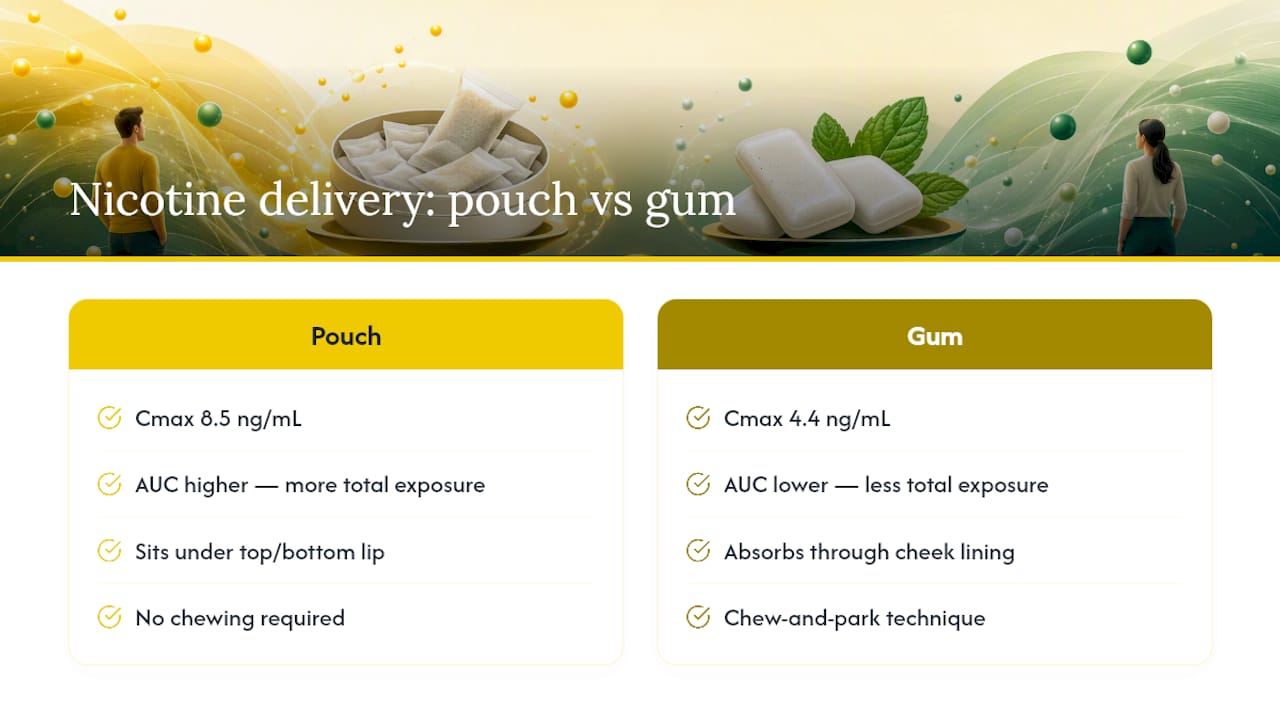
The numbers tell an interesting story. A randomised crossover study comparing oral nicotine products found the pouch delivered a mean Cmax of 8.5 ng/mL compared with 4.4 ng/mL for gum, with a correspondingly higher area under the curve (AUC), meaning more total nicotine exposure over time. Under the study’s fasting conditions, the pouch performed closer to a nicotine lozenge than to gum.
That doesn’t mean pouches “hit harder” in the way a cigarette does. A separate crossover trial found pouches typically reach peak plasma concentration (Tmax) at around 60 to 65 minutes, versus roughly 7 minutes for a cigarette. Cigarettes deliver a rapid spike; pouches build slowly and hold steadier levels. That’s why users often describe pouches as feeling like a plateau rather than a hit, even when total nicotine exposure is comparable or higher than a cigarette in some trial variants.
Formulation matters as much as the format. Pouch nicotine content, moisture level, and pH all shift how fast nicotine crosses the mucosa, and how carefully someone chews or parks their gum changes outcomes just as much on the gum side.
Pros and cons: discreetness, flavour, comfort and side effects
Choosing between the two often comes down to fit with your daily routine rather than any single “better” product. Here’s where each genuinely pulls ahead, and where it falls short.
- Discreetness: Pouches win for most social settings. No chewing motion, no visible gum packet, and a well-made pouch produces little to no drip. Gum is harder to hide in meetings or on video calls because of jaw movement and the occasional need to spit or dispose of it.
- Flavour and longevity: Gum flavour typically fades within the first 10 minutes of chewing. Pouches, particularly ones engineered for slower release, can hold flavour for 30 to 60 minutes, which changes how often you need to reach for another one.
- Dental and oral comfort: Gum can stick to fillings, crowns, or orthodontic work, which is a real problem for anyone with dental hardware. Pouches avoid that entirely but bring their own sensation, a tingling or slight numbness under the lip that some new users find unfamiliar at first.
- Side effects: Gum users commonly report jaw soreness, hiccups, and hiccupping from swallowed nicotine if chewed too quickly. Pouch users more often report mild gum irritation or nausea if the strength is too high for their tolerance.
- Behavioural fit: Gum works well with scheduled dosing, useful if you’re following a structured quit attempt with set intervals. Pouches suit ad-hoc use, popping one in when you need it rather than watching the clock.
Pro Tip: If you’re new to pouches, start with a lower strength than you think you need. It’s far easier to step up in strength than to manage nausea from starting too high.
Neither product is risk-free, and nicotine overuse is possible with both, particularly if you’re using gum and pouches together without adjusting your total intake.
When should you choose licensed NRT over pouches?
Nicotine gum’s status as a licensed medicine is the single biggest practical difference between these two products, and it should drive your decision if quitting smoking is the actual goal.
The NHS lists gum among its recommended stop-smoking medicines, with dosing schedules designed around your smoking history. Prescribing guidance for nicotine polacrilex gum recommends at least nine pieces a day during the first six weeks of a quit attempt, typically tapering across a 12-week course. The NHS also suggests combining a fast-acting product like gum with a slower-acting patch for better quit rates, a structured approach pouches simply aren’t designed to support.
Nicotine pouches, by contrast, are consumer nicotine products. They aren’t licensed medicines, carry no clinical dosing schedule, and haven’t been evaluated as smoking cessation tools in the way gum has. That’s not a criticism of pouches as a product category, but it does mean the evidence base behind them serves a different purpose: discreet, smoke-free nicotine use for adults who’ve already stopped smoking or never smoked, rather than a structured route off nicotine altogether.
Certain groups need extra caution regardless of which product they choose. Anyone with a heart condition, anyone pregnant, and anyone under 18 should speak to a doctor before using either product. Ireland has also moved toward tighter regulation of nicotine pouches, including proposed age restrictions and advertising limits, reported in early 2026, which is worth knowing if you’re weighing long-term availability.
As a rough rule: pick gum if you have a quit plan or a medical condition that needs professional input. Consider pouches if you’re an adult who isn’t trying to quit but wants a smoke-free, discreet nicotine option.
How do you use each one properly, and how do you switch?
Technique changes outcomes more than most people expect, on both sides of this comparison.
For gum, chew slowly until you notice a light tingle or peppery taste, then park it between your cheek and gum. Leave it there for a few minutes, then resume chewing when the tingle fades, repeating for around 30 minutes per piece. Chewing continuously without parking wastes nicotine and increases the odds of hiccups and stomach upset.
For pouches, tuck the pouch between your gum and upper or lower lip, wherever feels comfortable, and leave it in place. Most sessions run 30 to 60 minutes depending on the product; there’s no chewing and no need to move it around.
If you’re switching from gum to pouches, a short structured trial beats guessing:
- Check your baseline. Note how many pieces of gum you use daily and at what strength.
- Match the nicotine strength. Don’t assume higher milligrams in a pouch equal a stronger effect than your usual gum. Start moderate.
- Run a short trial. Try pouches for a few days alongside your normal routine before dropping gum entirely.
- Track cravings and side effects. Note any nausea, gum irritation, or unmet cravings and adjust strength accordingly.
- Speak to a clinician if quitting is the goal. Pouches aren’t a substitute for a structured quit programme.
Pro Tip: Avoid using pouches or gum right after coffee or fizzy drinks. Acidic drinks can reduce how efficiently your mouth absorbs nicotine, so you may reach for another one sooner than you need to.
Where Fuzesnus fits into this comparison
Fuzesnus builds its pouches around three things readers of this comparison tend to care about most: quick, smooth nicotine release, low drip so you’re not managing excess moisture in your mouth, and flavour that holds for 30 to 60 minutes rather than fading in the first few minutes. Same-day delivery may be available if you order by 6 PM in eligible areas.
If you want a deeper walkthrough of pouch mechanics and placement, the Fuzesnus guide to snus and nicotine pouches covers usage step by step. This section reflects Fuzesnus’s own product positioning rather than an independent clinical evaluation. Nothing here should be read as a substitute for the pharmacokinetic evidence discussed earlier or for advice from a healthcare professional.
What does switching from gum to pouches do to your oral health long term?
Long-term oral health outcomes differ between the two, though neither is entirely free of risk.
Chewing gum daily for months, particularly at the higher end of a 12-week quit course, can aggravate jaw joints in people prone to temporomandibular discomfort, and gum’s sugar-free sweeteners occasionally cause digestive upset with heavy use. It also interacts poorly with dental fillings, crowns, and bridges, sticking or dislodging loose work over time.
Pouches remove the chewing motion, which sidesteps jaw strain and dental-hardware issues entirely. But sustained contact between a pouch and gum tissue raises its own concerns. Regular pouch users sometimes report localised gum irritation, minor recession, or tissue whitening at the placement site over months of daily use, particularly with higher-strength products or when the pouch stays in one spot too long. Rotating placement between upper and lower lip, and giving your gums occasional breaks, reduces localised irritation.
Neither gum nor pouches carry the tar and combustion byproducts that drive most smoking-related oral disease, so both sit well below cigarettes on that specific risk. That’s a low bar, though, and it doesn’t mean either product is risk-free for teeth and gums used constantly, indefinitely, without variation.
Our take: stop treating this as a like-for-like swap
The conventional advice treats gum and pouches as interchangeable nicotine formats, and that’s the mistake worth correcting first. They’re built for different jobs. Gum carries a licensed quit-aid framework with dosing schedules behind it; pouches are a consumer product engineered for discreet, sustained use, not a clinically validated route off nicotine.
What the pharmacokinetic data actually supports is this: pouches often deliver more total nicotine exposure than gum, not less, which surprises people who assume “smokeless” means “milder.” That’s a reason to be careful with strength selection, not a reason to avoid pouches.
If you’re quitting smoking, don’t substitute pouches for a structured NRT plan without professional input. If you’ve already quit or never smoked and want a discreet, flexible nicotine option, pouches are a reasonable fit, provided you start at a sensible strength and pay attention to how your body responds rather than copying someone else’s routine.
— FNGN
Try Fuzesnus pouches built for discreet, everyday use
This brand offers pouches designed to be low-drip with flavour that lasts longer than some other pouches on the market. If you’re moving away from gum’s chewing and spitting routine, that’s the practical difference that matters day to day. Three options cover most starting points.
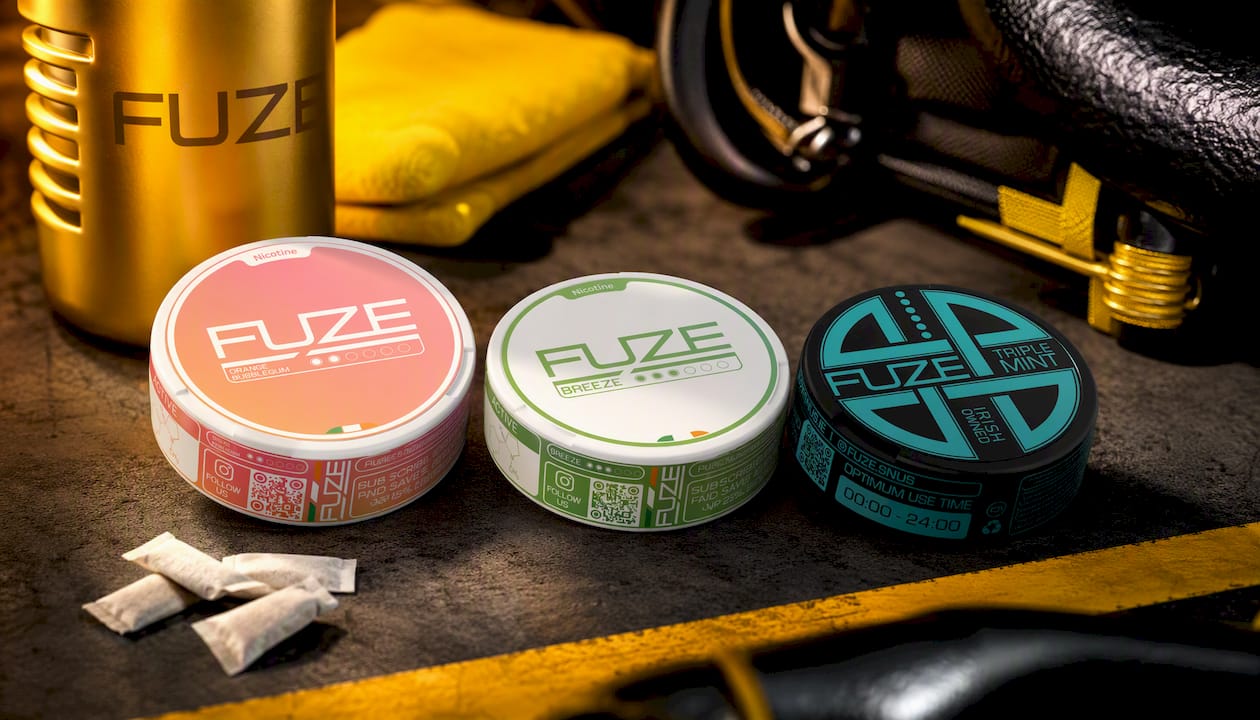
Orange Bubblegum 8mg suits anyone trying pouches for the first time, with a lower strength that won’t overwhelm someone used to weaker gum doses. BREEZE 10mg is the steady, everyday option once you know your tolerance and want consistent discreet use. Triple Mint 20mg is built for experienced users who need a stronger nicotine delivery and a sharper mint finish.
Order by 6 PM for same-day delivery in eligible areas. Pick the strength that matches your current gum habit, not the one that sounds strongest, and order your first pack through the Fuzesnus product range today.
This article is general information, not a substitute for advice from a qualified doctor. Consult a qualified healthcare professional about your own circumstances before acting on anything here.
Sources
- Pharmacokinetics of oral nicotine pouches vs gum/lozenge — PMC
- Pharmacokinetics and subjective effects of oral nicotine pouches — Springer
- NICOTINE- nicotine polacrilex gum, chewing - DailyMed